The Tetracycle
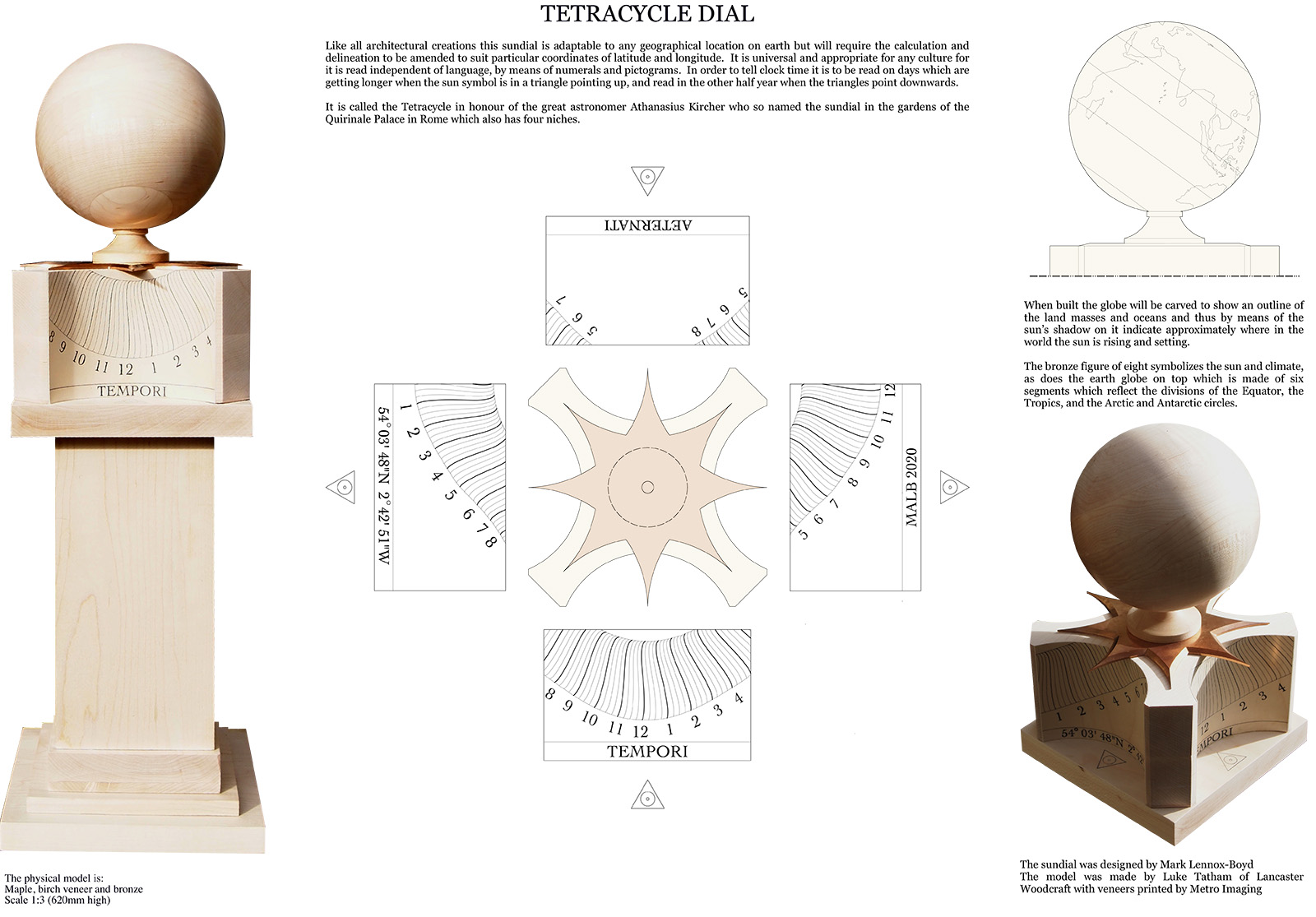
This is the photograph of a model of a dial of unique design. It has three semi-circular niches with engravings which allow for the difference in sun time and clock time. It is so named in honour of Athanasius Kircher, the great astronomer who so named the sundial in the gardens of the Quirinale Palace in Rome which also has four niches. My stepdaughter insisted that I enter this design for consideration by the committee of The Venice biennale of last year. I knew it would not be accepted but followed her wish.
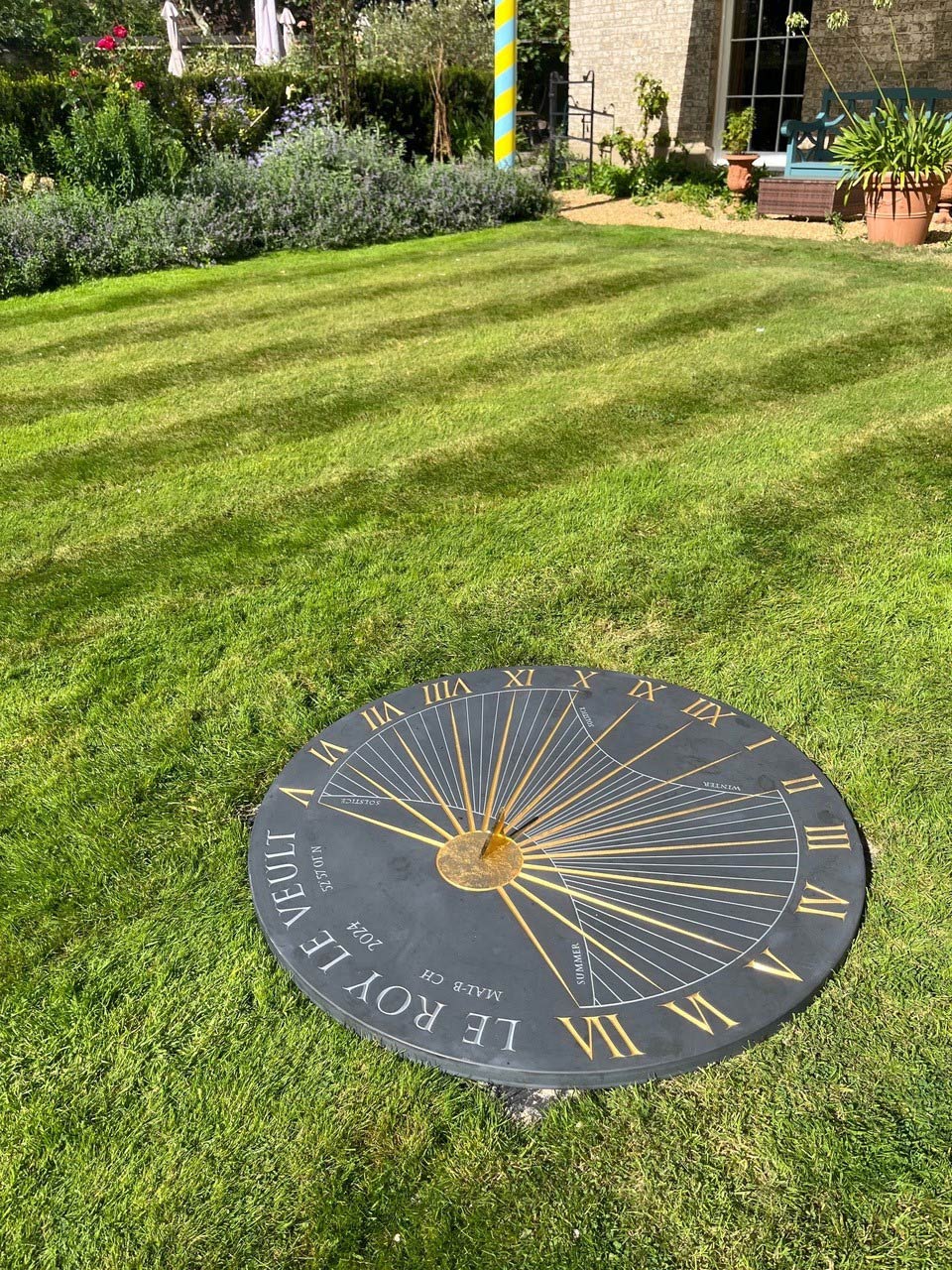
Sundial for a Legislator
Welsh slate 100cm in diameter for a friend who is an active member of the House of Lords. It was beautifully engraved by Charlotte Howarth.
An 80th birthday present
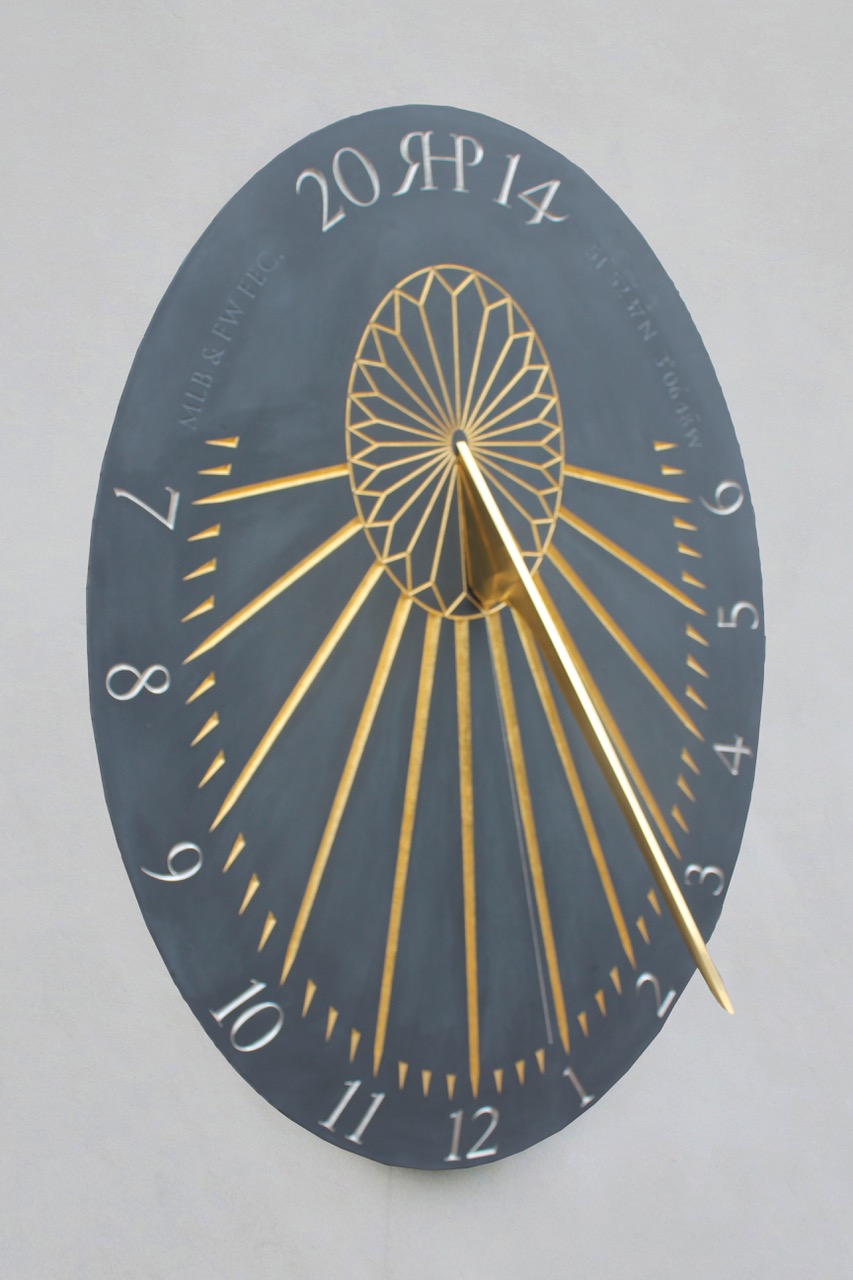
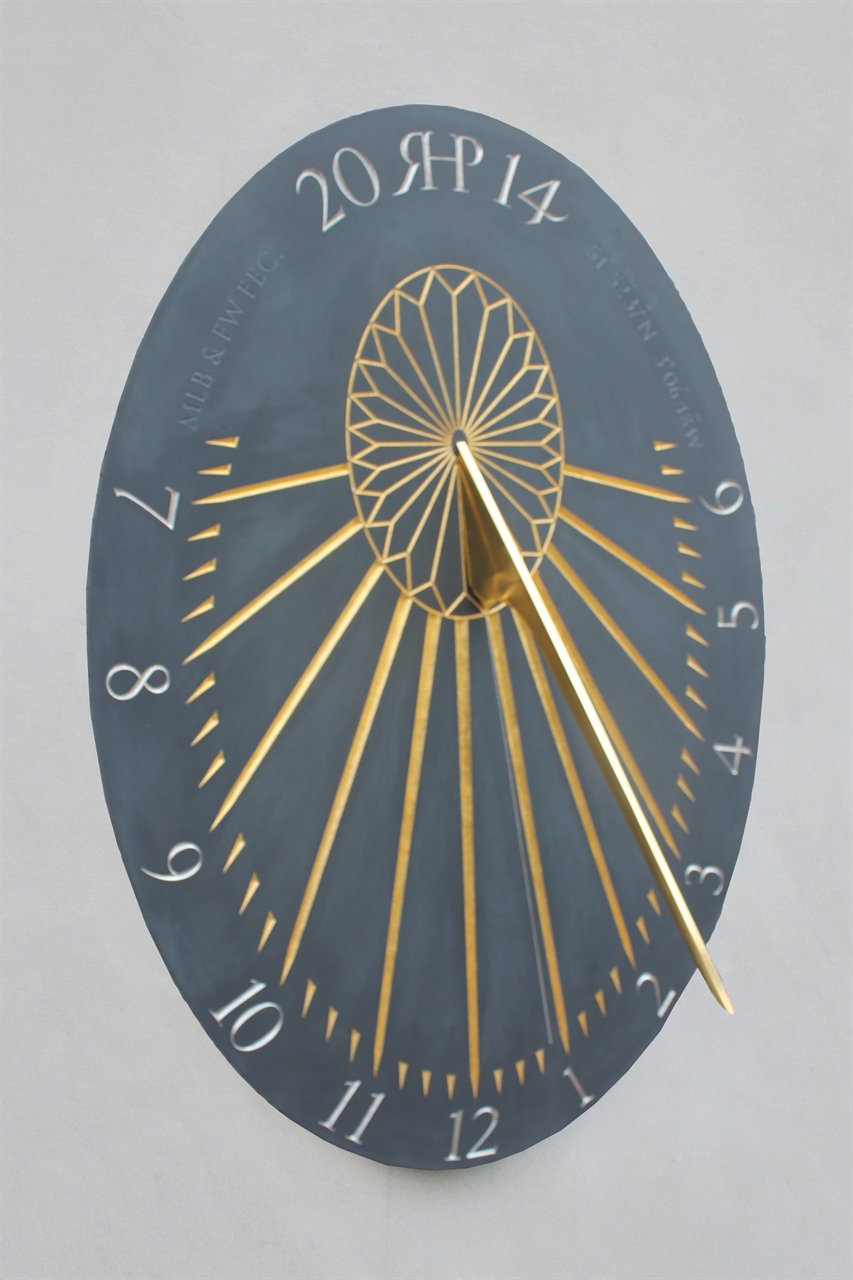
Elliptical slab of grey slate for a south facing wall in Herefordshire. The tip of the long gnomon just touches XII at noon for a celebration.
The Voss Obelisk 2019
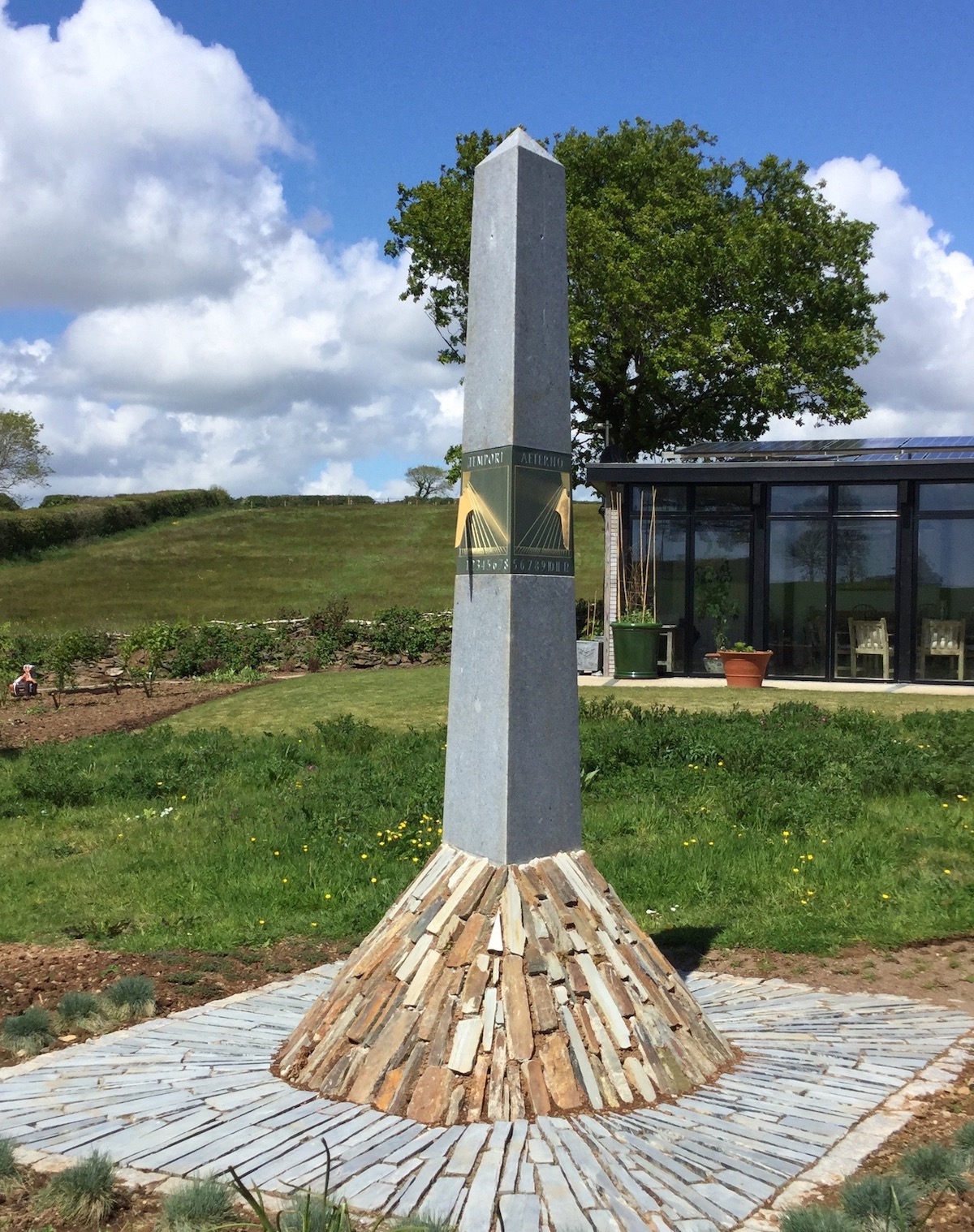
In 2019 I completed the construction of an obelisk dial in Cornwall. It is sited at the centre of an arc formed by the curve of the contemporary house. The faces are carved on a triangular section of Burlington slate with the top and bottom sections made of Portugese granite, and it sits on a mound made in the form of a Cornish bank which will grass over in time. It is about three metres tall and tells time on the two faces to SW and SE. The third face has a table of corrections.
Glenfernate Cairn 2015
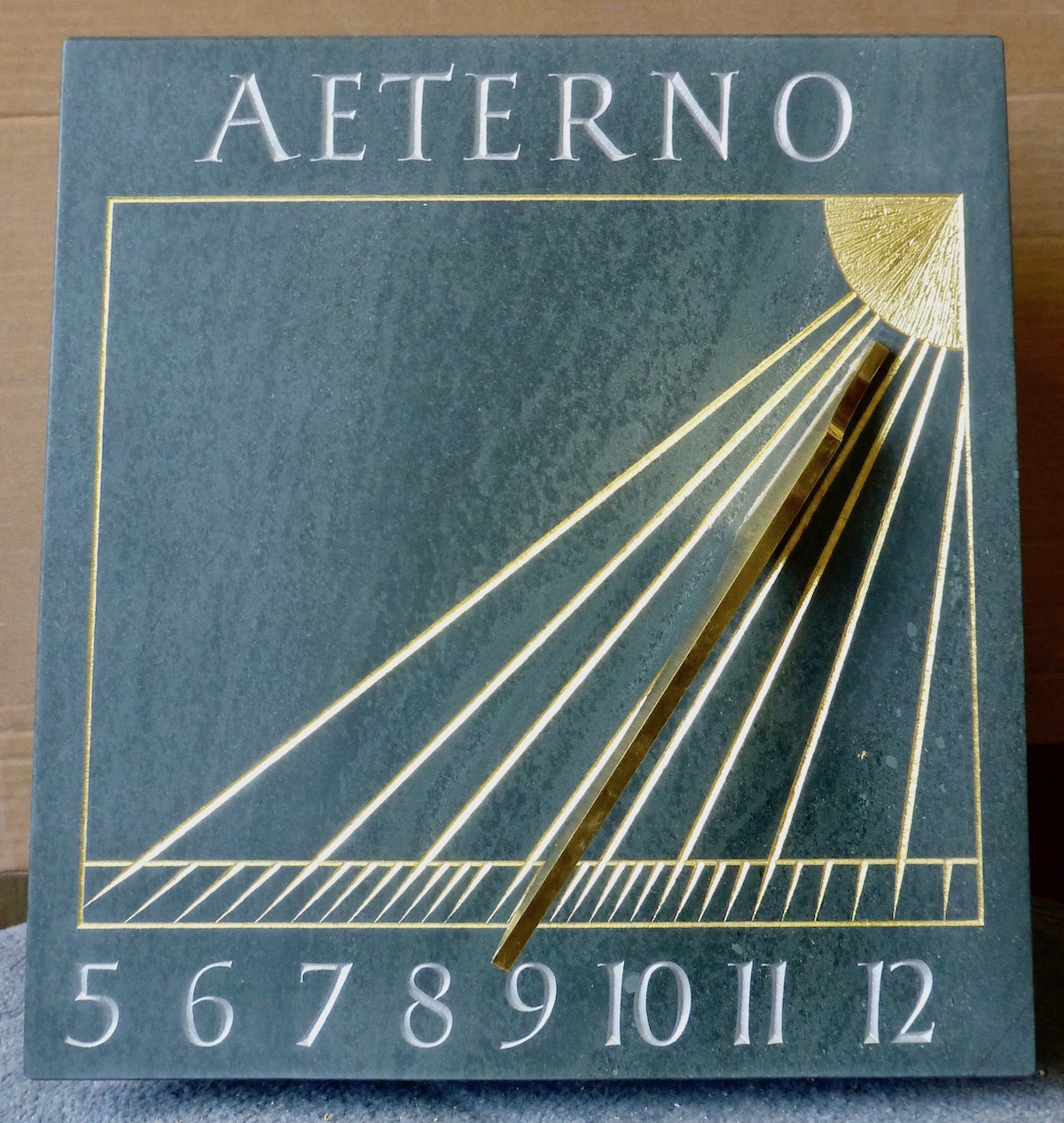
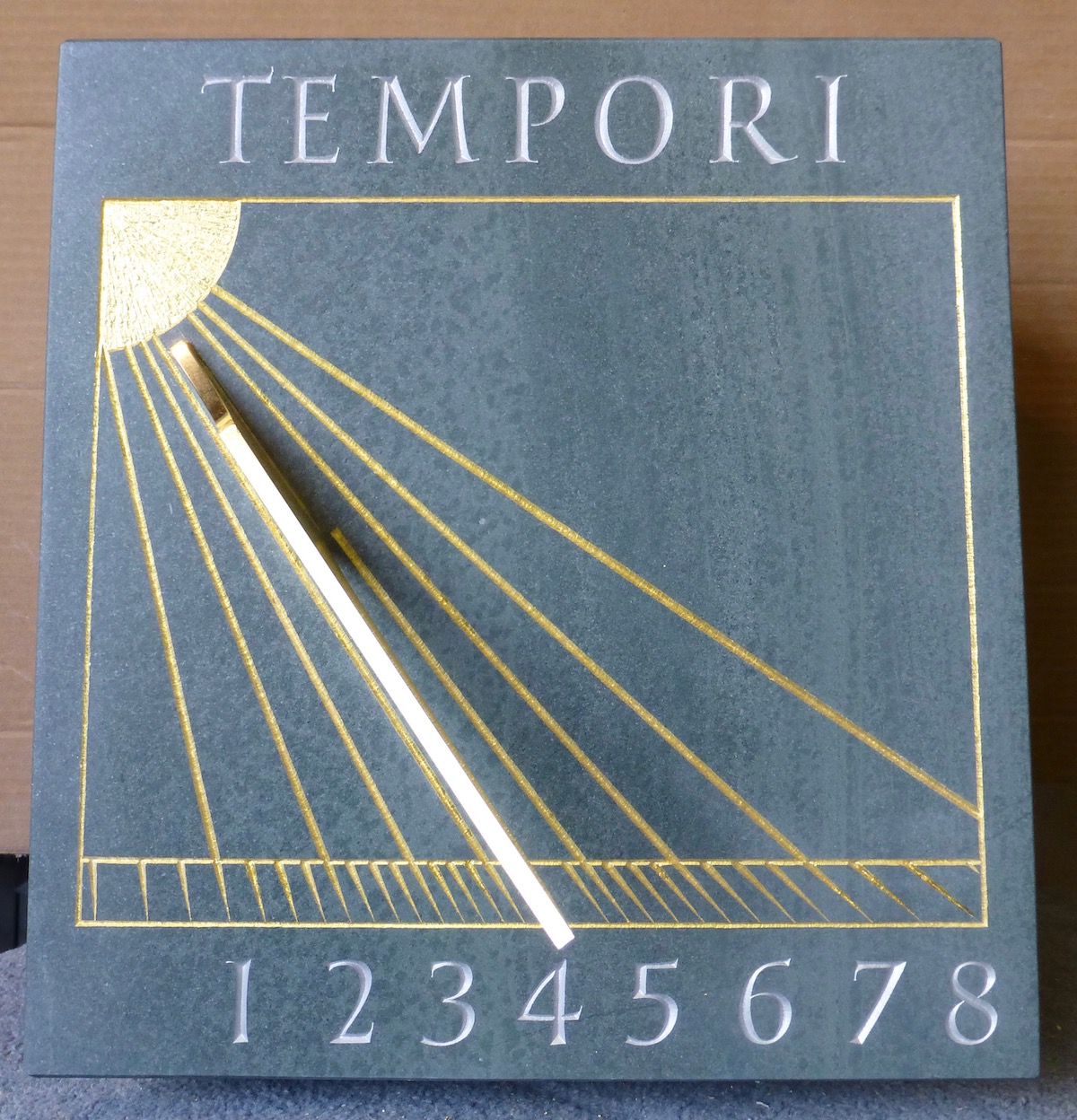
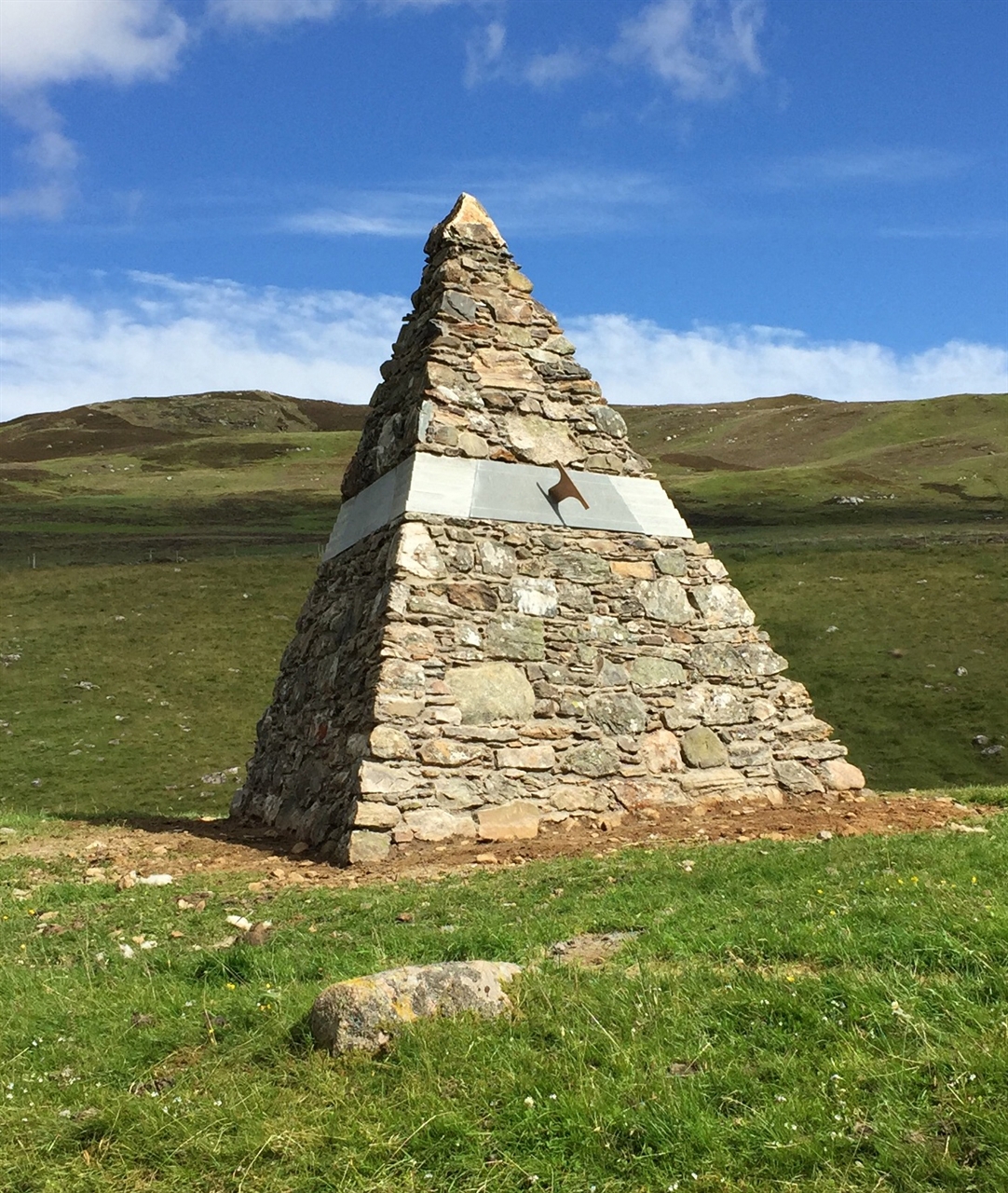
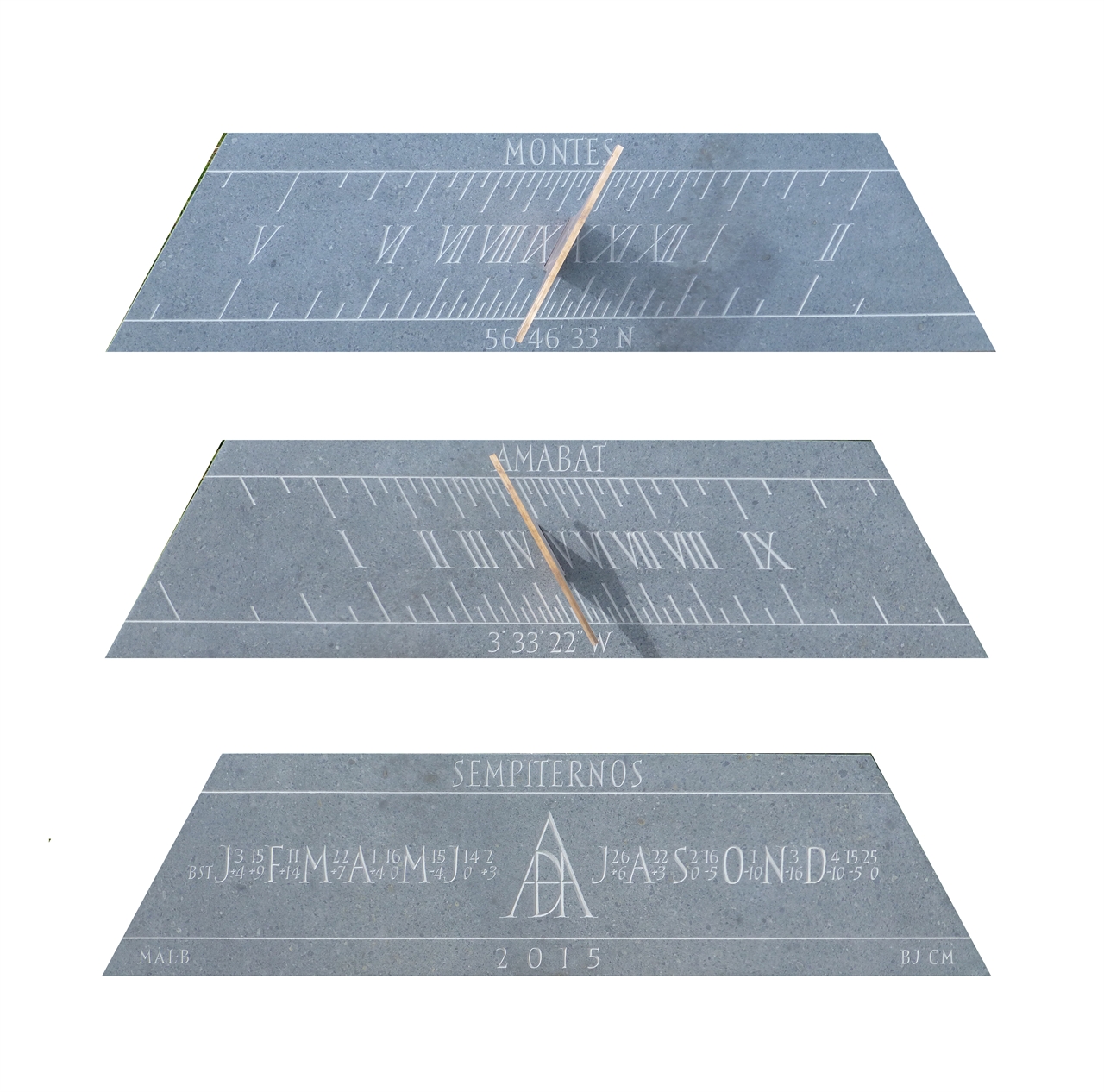
The cairn is about ten feet high on a hill near Pitlochry. It consists of two reclining declining sundials and a table of corrections, of Burlington slate. It is based on a tetrahedron, but not a regular one, for it is designed so that the southern edge is parallel with the axis of the earth and so points towards the pole star. To align it correctly the dials were first erected on a turntable and adjusted to tell the correct time by the sun. The surrounding stone work was then built.
MONTES AMABAT SEMPITERNOS
He loved the eternal hills

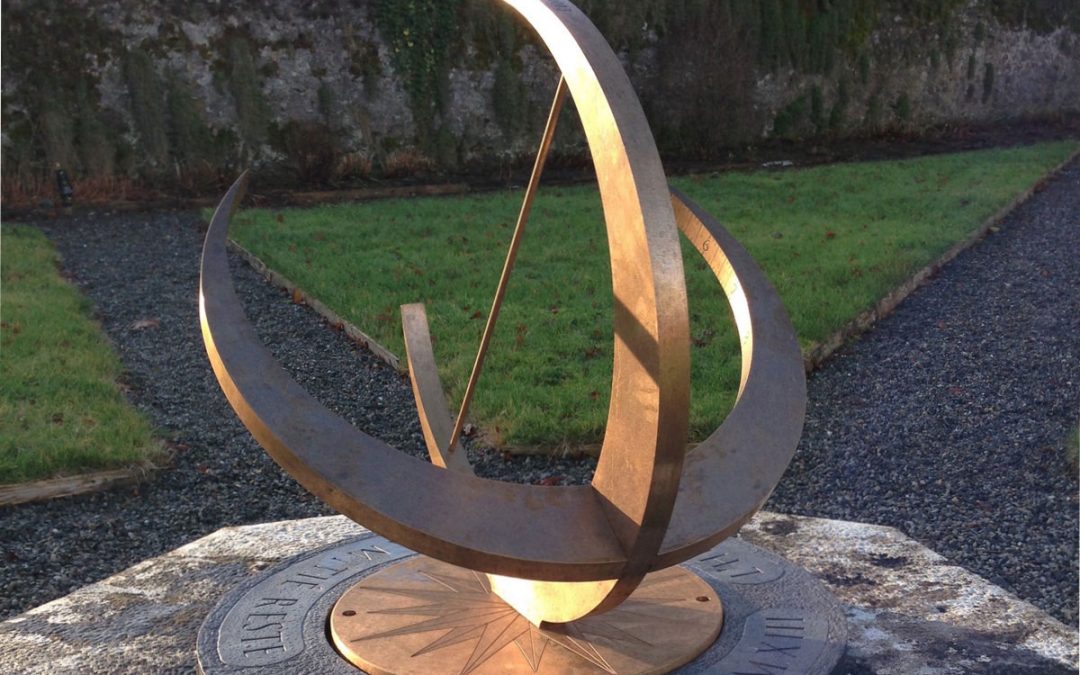
Armillary dial 2014
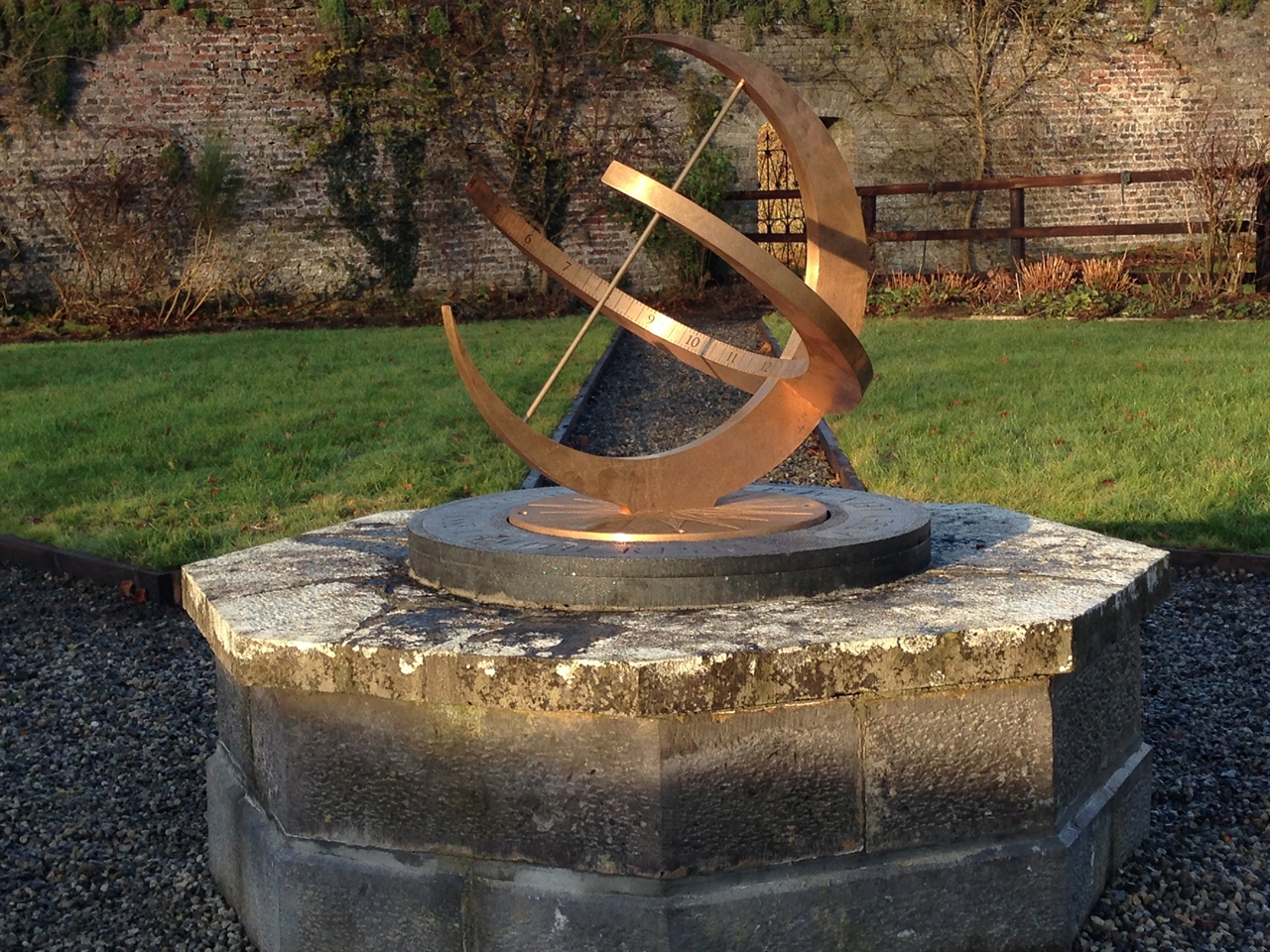
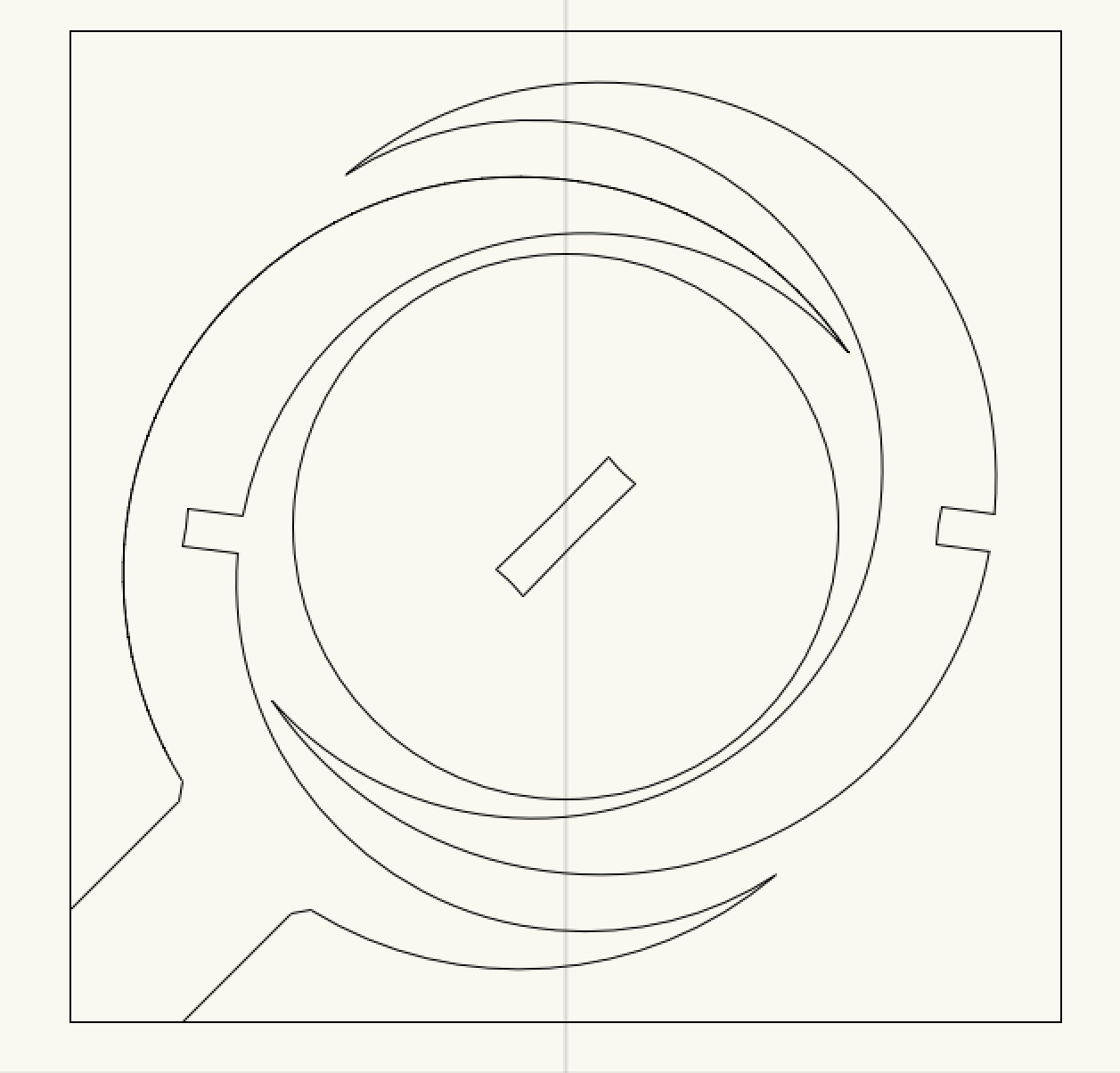
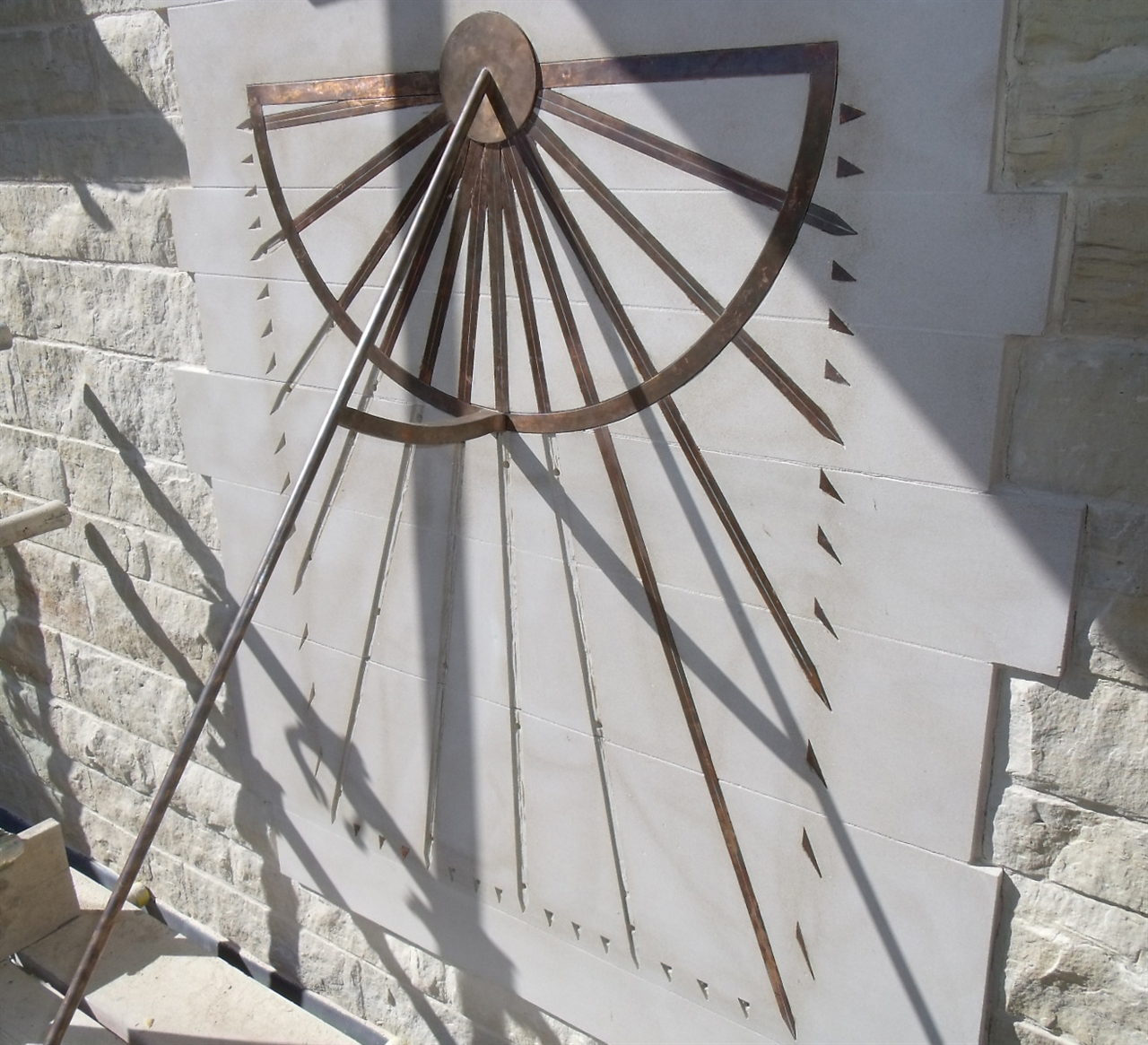
Armillary means made of rings. A sheet of bronze 1000 x 1000 x 40mm was cut from a computer design by water jet to produce the two crescents and circular base, and assembled with a rod to create the dial for a site in Eire.
Armillary sphere c2005
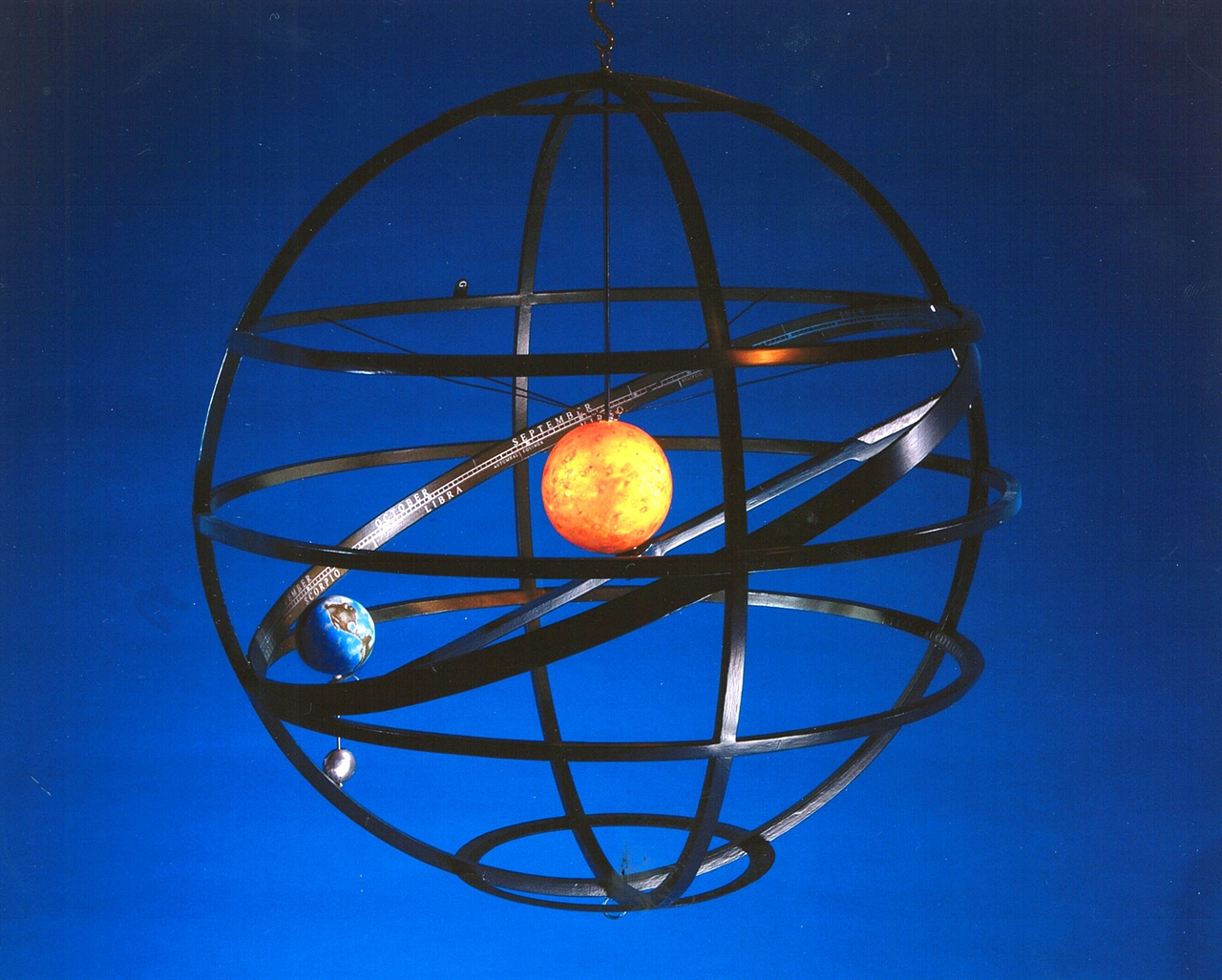
An Armillary sphere is a model of the universe as the ancients believed it to be. The top and bottom rings represent the Arctic and Antarctic circles, the central ring the Equator, and the two others the Tropics of Cancer and Capricorn. The Earth is at the end of a bar which revolves round the sun in the Ecliptic band and as it does so illustrates the changing of the seasons.
Buscot Obelisk 2013
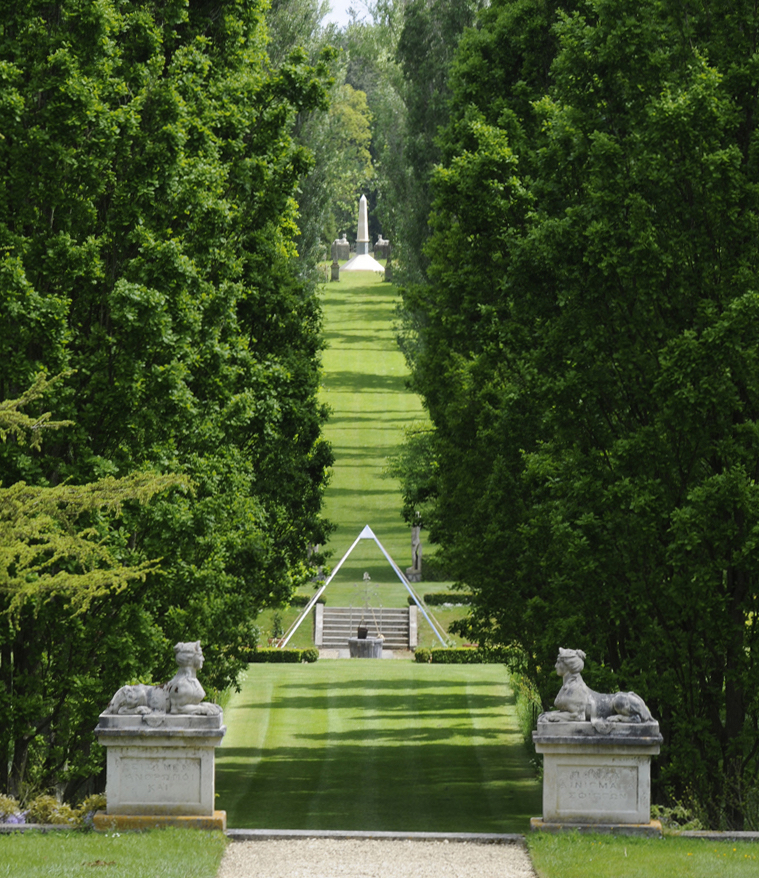
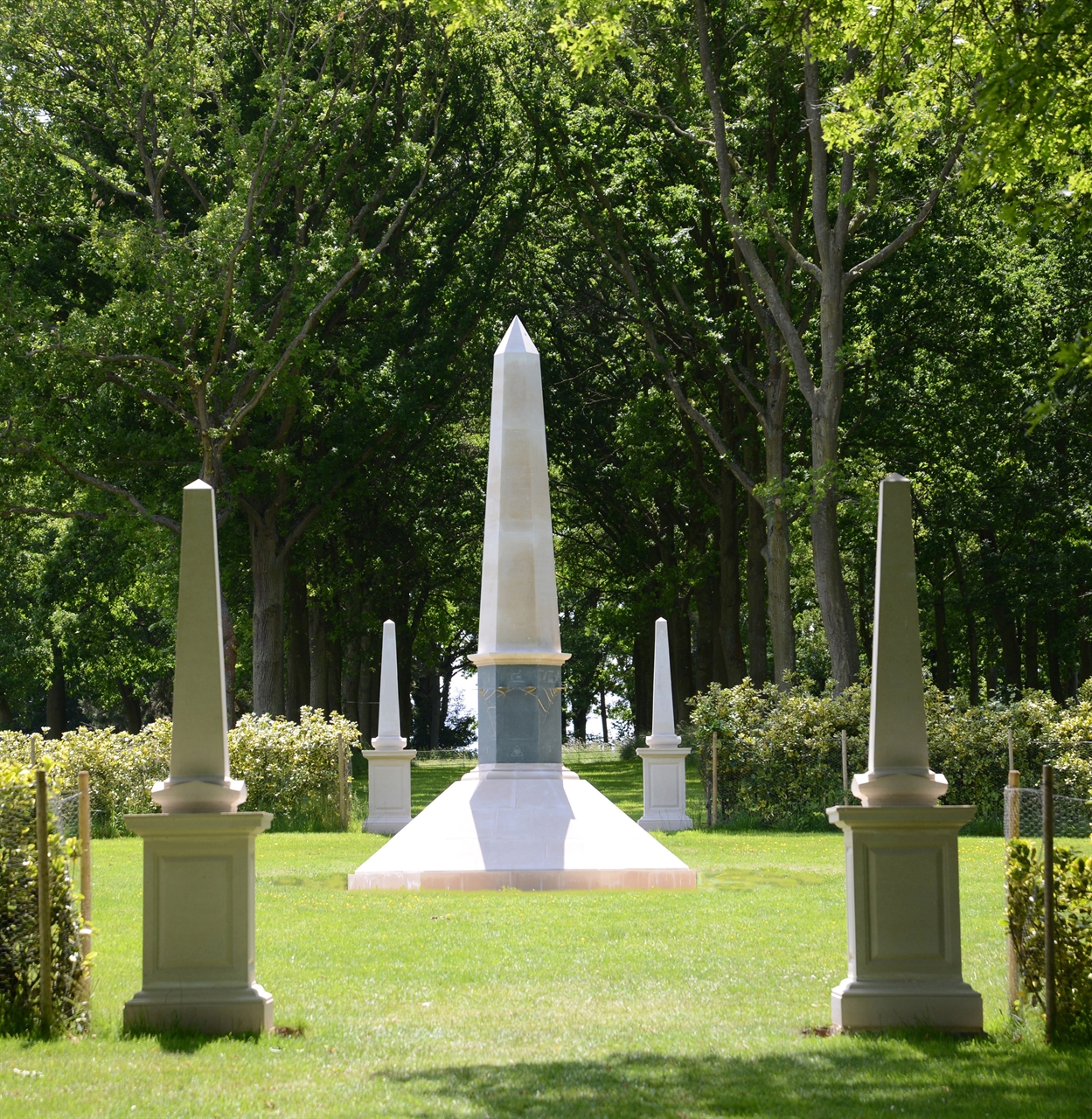
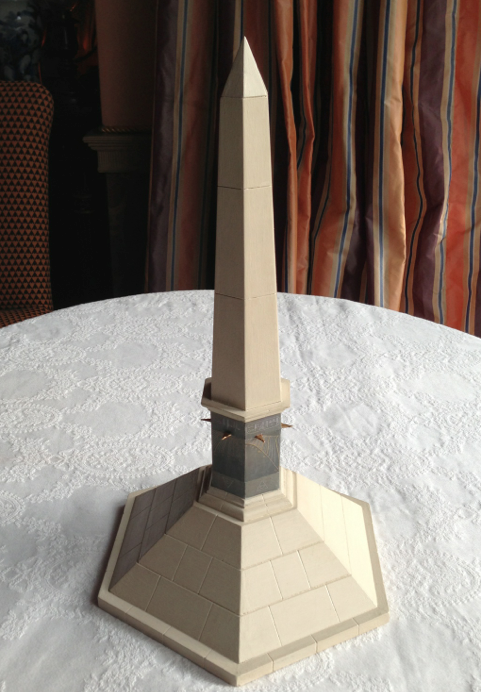
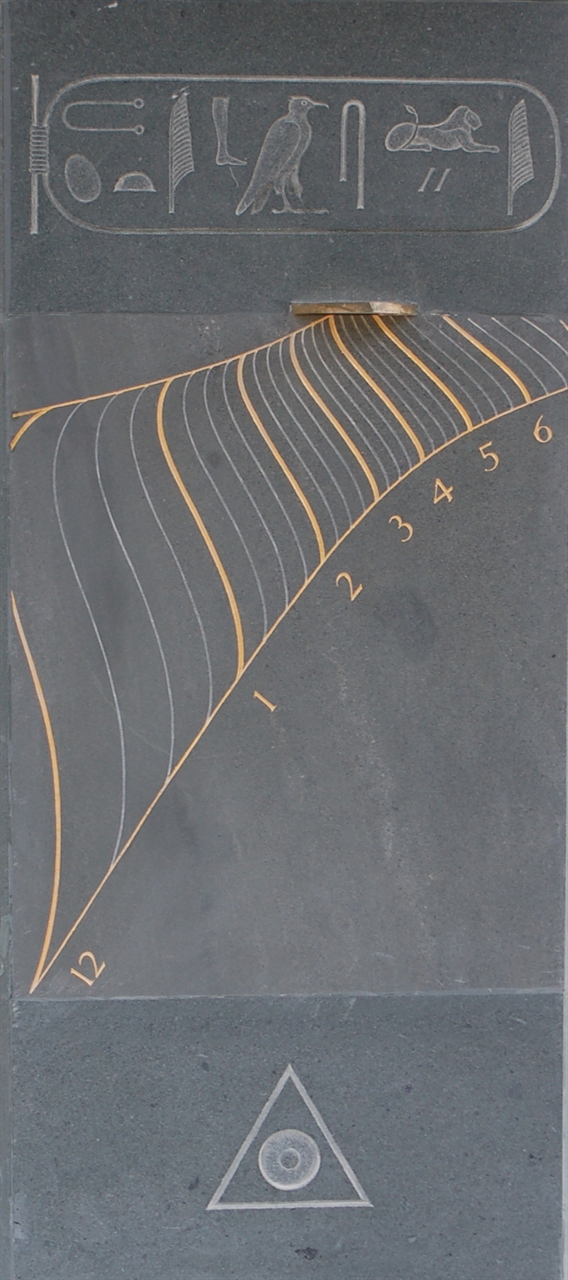
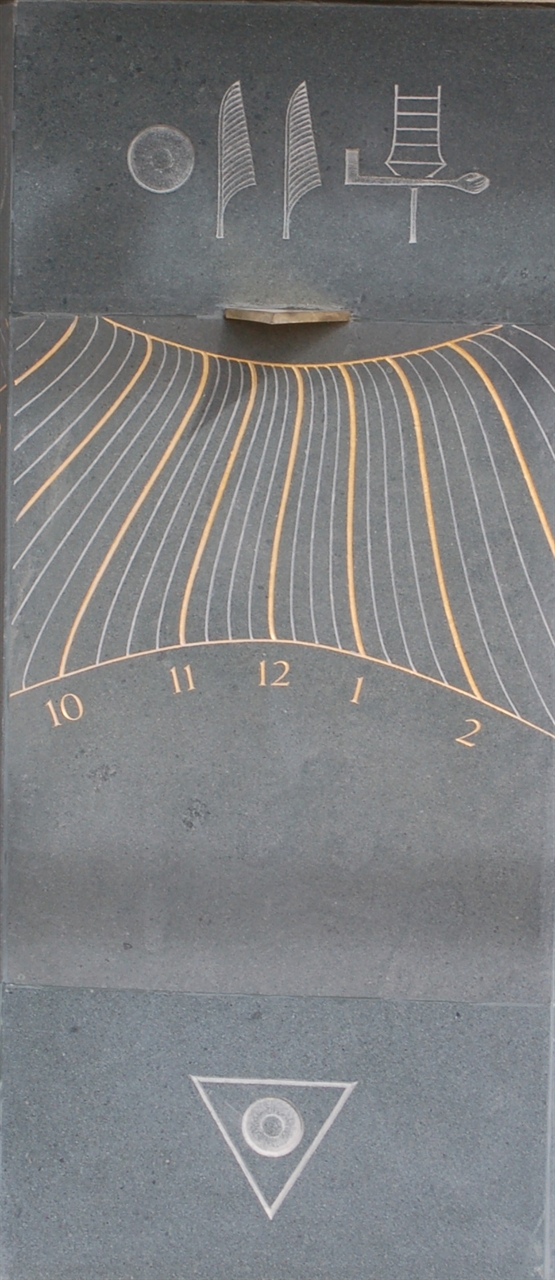
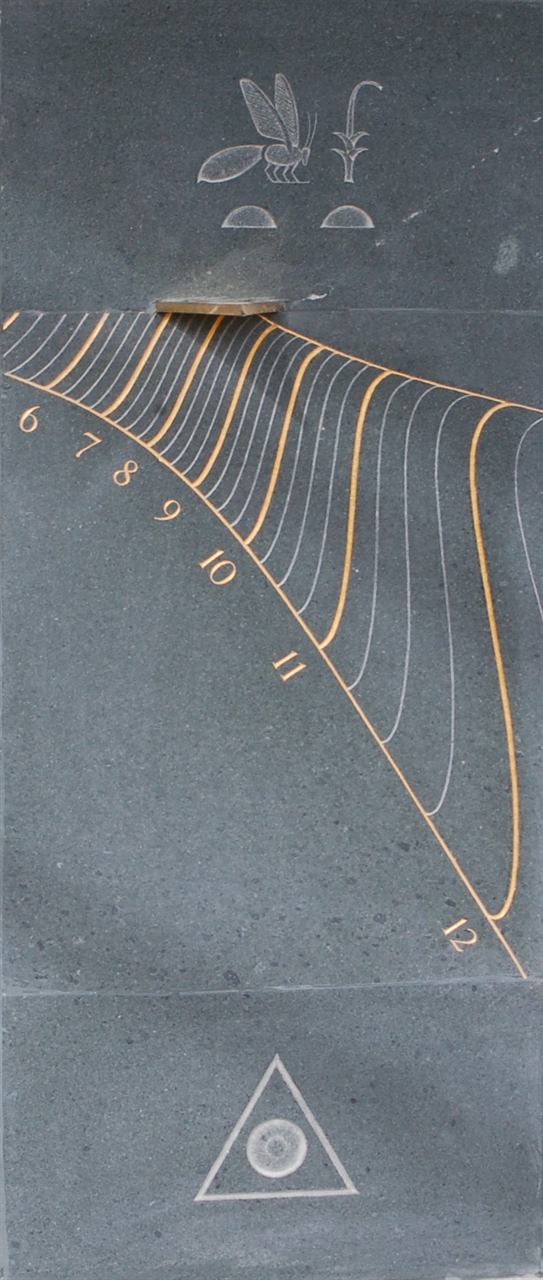
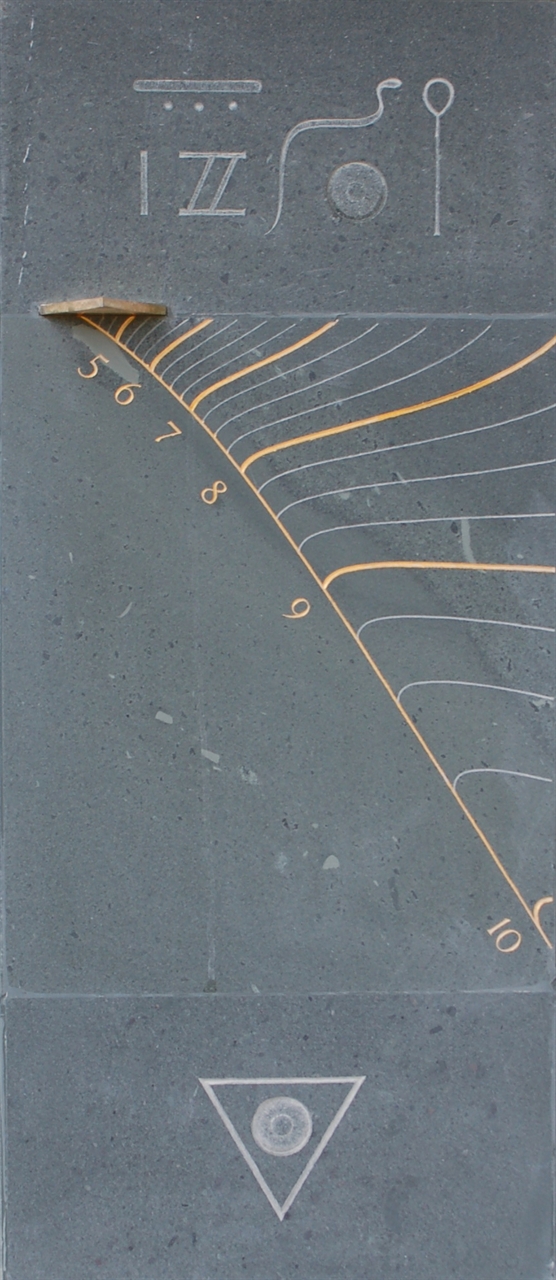
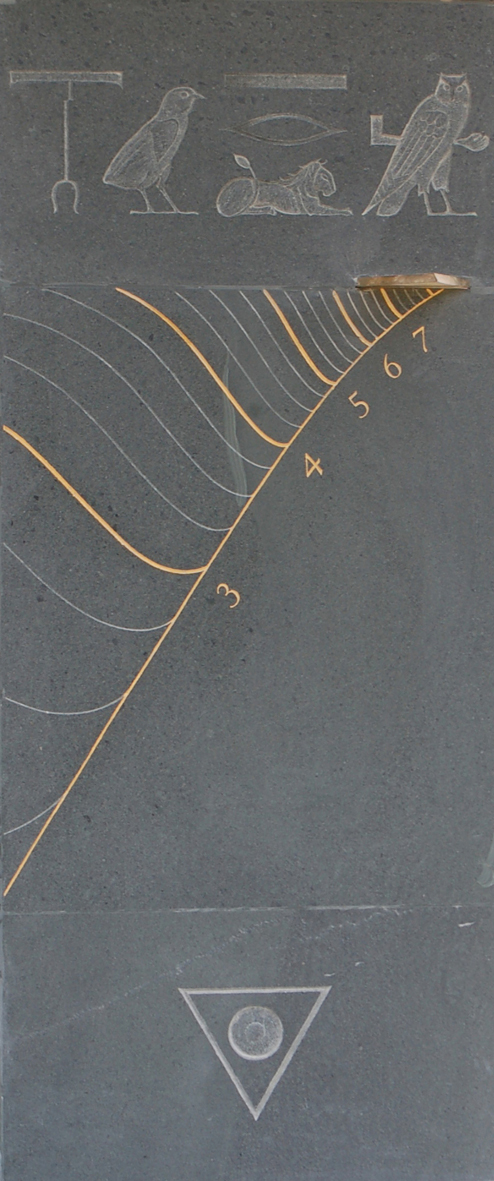
The obelisk is at Buscot park, a National Trust property open to the public, and was commissioned by Lord Faringdon for the Egyptian garden. Six vertical faces of Burlington slate are fixed to an obelisk 500cm tall built of Portland stone. The time is read from the tip of the gnomons (pointers). Markings are adjusted for the Equation of Time so the dials tell precise time. Three of the dials are read when the days are getting longer, and the three others when the days are getting shorter. The lower illustrations shows the faces – days shorter, signified by the hieroglyph for the sun – a disc with a button at its centre inside an equilateral triangle pointing downwards, the other three faces with triangles pointing upwards for days longer. The obelisk was built to celebrate the diamond jubilee of HM the Queen, and some of the hieroglyphs translated read ‘Long live Queen Elizabeth’. It was most complicated to build and align but the project went very smoothly.

The Neuadd & Ribblesdale
The Neuadd vertical dial was commissioned for the eightieth birthday of a friend. His birthday is in the summer and at 1pm that day (12 on dial – summer time) the tip of the gnomon’s shadow will pass over the numeral 12, time for refreshment before a birthday lunch. The poor man who made the gnomon actually carved it out of bronze.
The Ribblesdale vertical dial was carved onto an existing stone wall which was inlaid with bronze strips and numerals.
Hele 2018
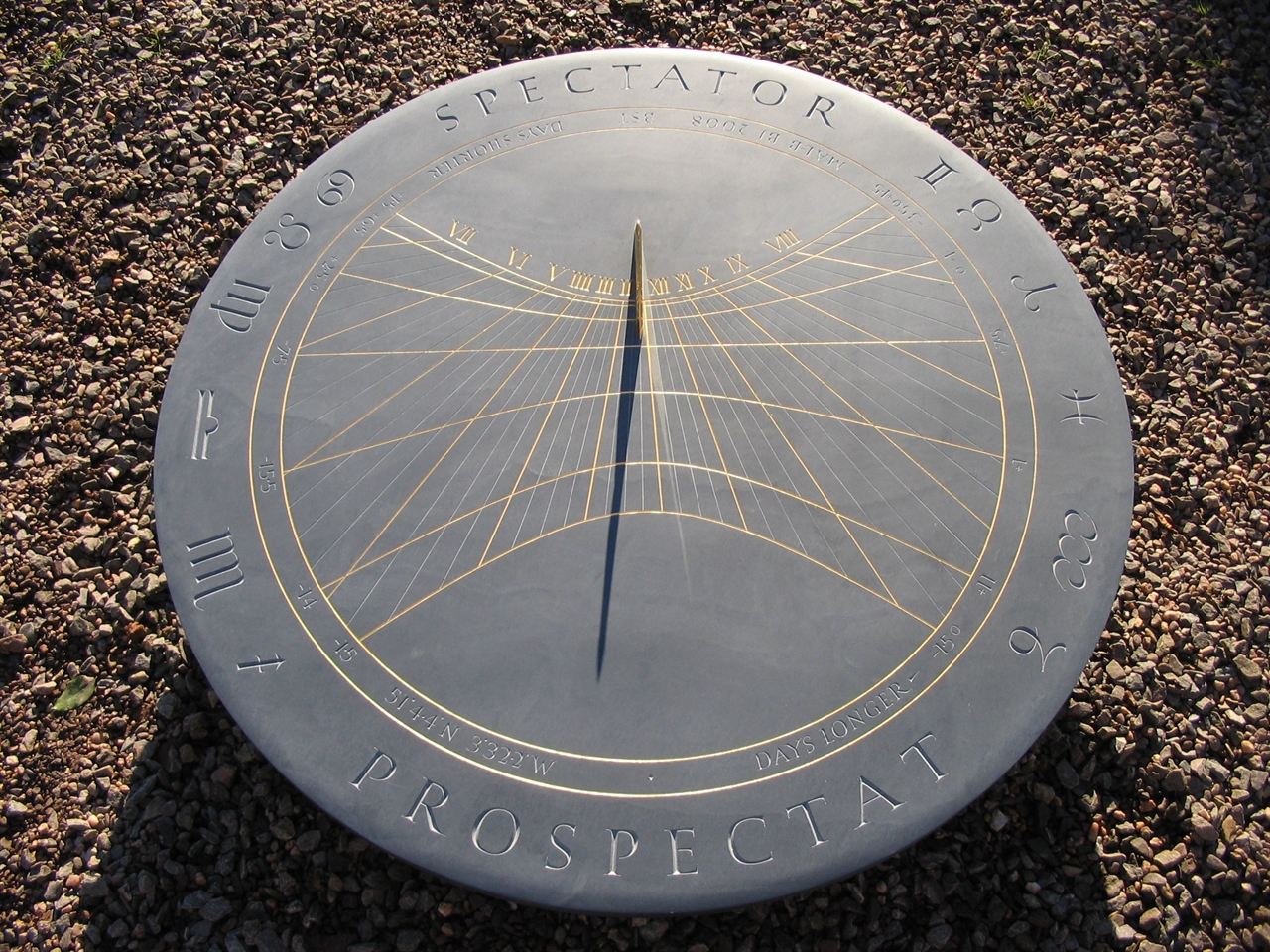
In Devon a slab of Burlington slate 80cm in diameter lies close to the ground. It displays corrections for the Equation of time and the Zodiac. It was made as a gift to someone who was literary editor of the Spectator for a great many years. The inscription written by a distinguished Law Lord reflects this.
Blackpool & Rosemoor
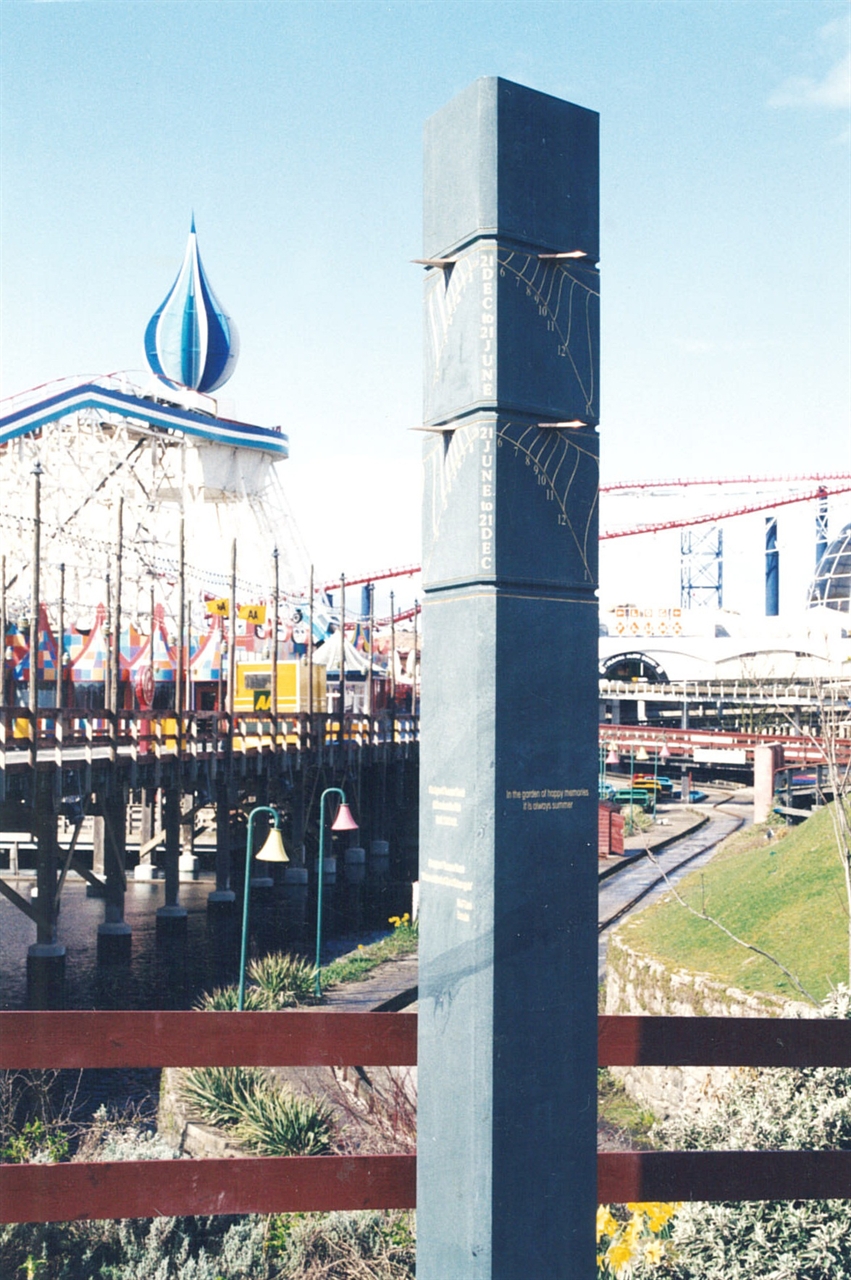
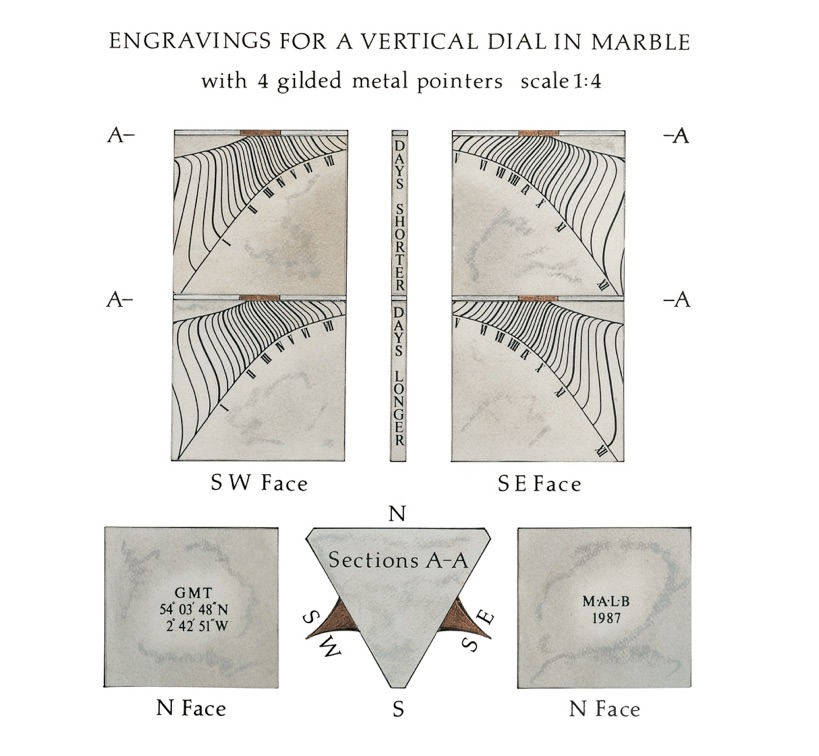
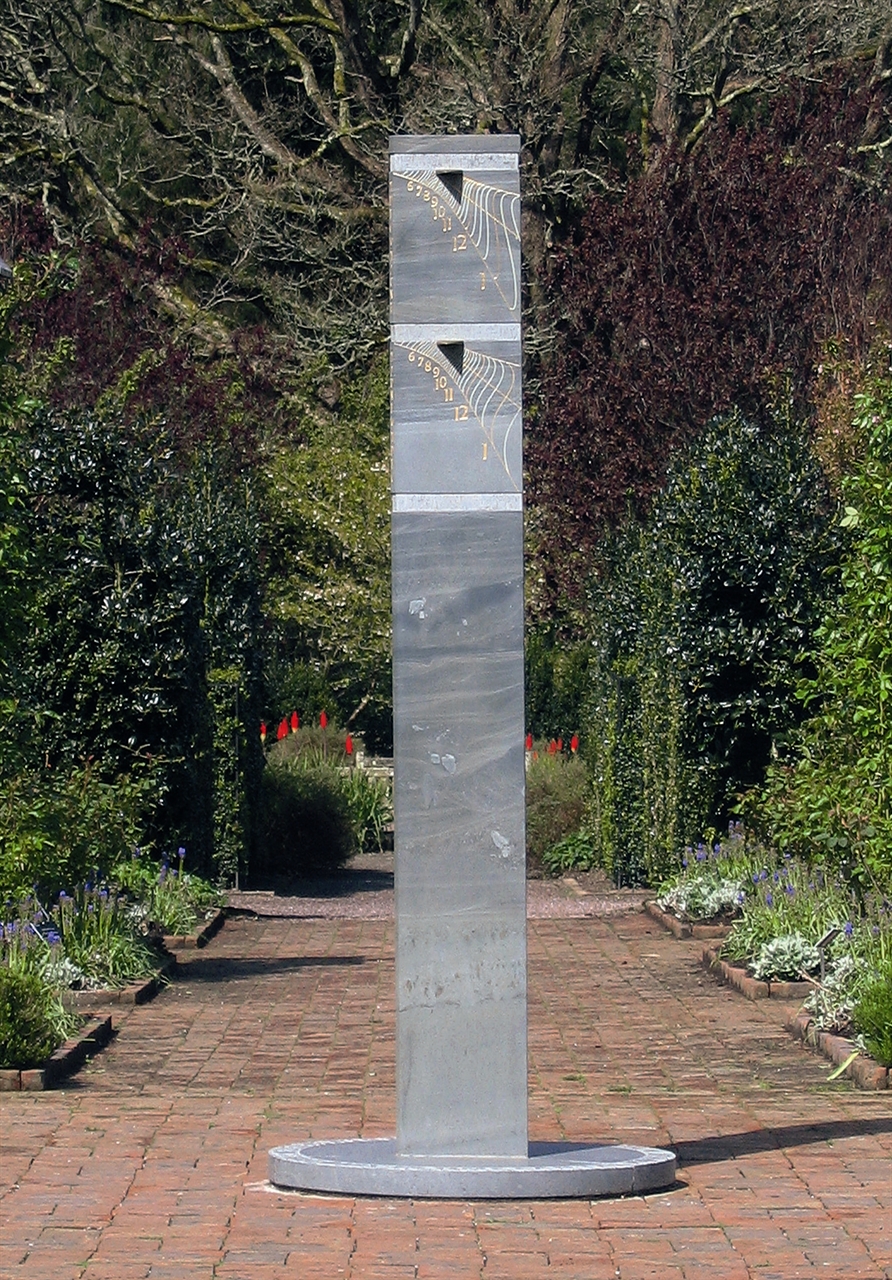
The dials at Blackpool Pleasure Beach, built for the Millennium, and at Rosemoor, the garden of the Royal Horticultural Society in Devon, are similar. They are engraved on colums of Burlington slate of triangular cross-section, and the central illustration gives an example of all four faces, calculated for another site. The markings are curved because the designs incorporate corrections for the Equation of Time, and so the times read from the tips of the gnomons show clock time.
Holker, Upton Wold & Na Lagan
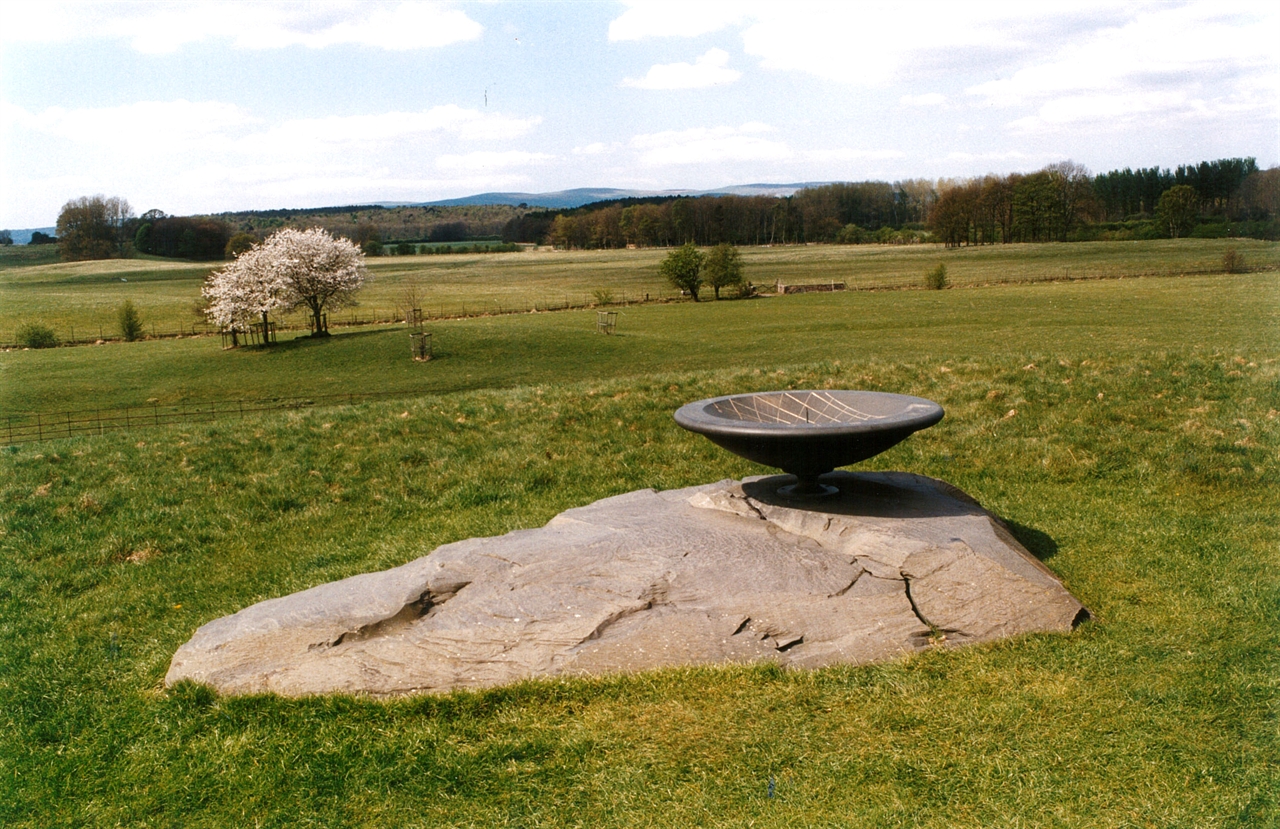
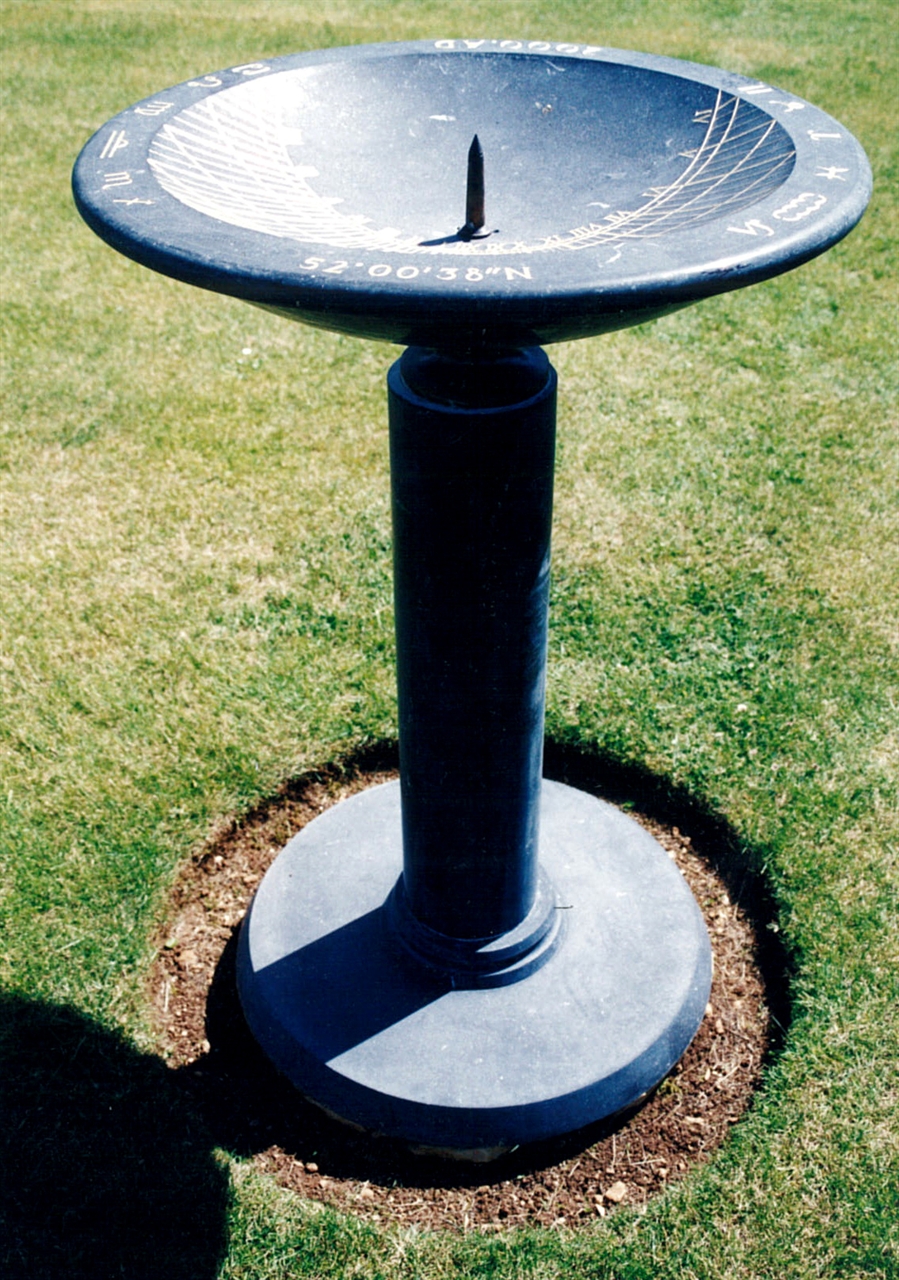
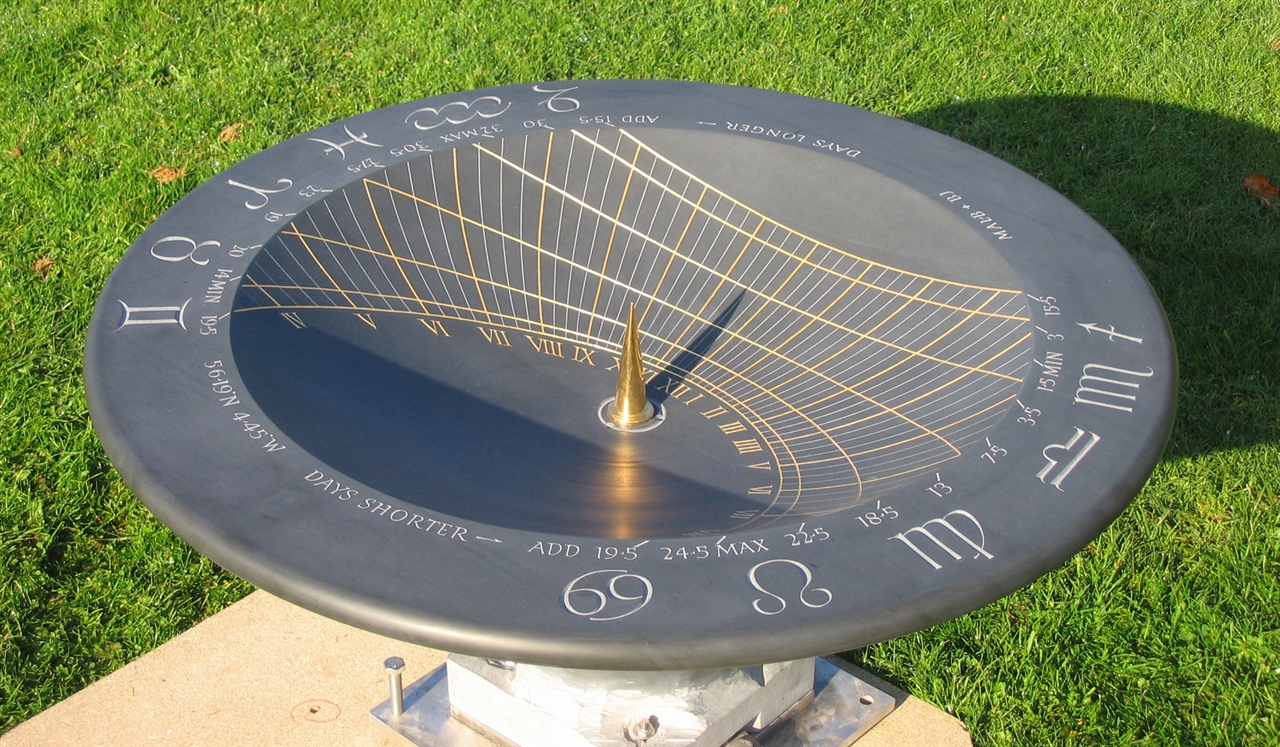
The three dials illustrated are known as Scaphe dials, from the classical Greek word for a boat. They are all turned from Burlington slate and each have divisions marking the signs of the Zodiac. In addition Na Lagan has corrections for the Equation of Time.
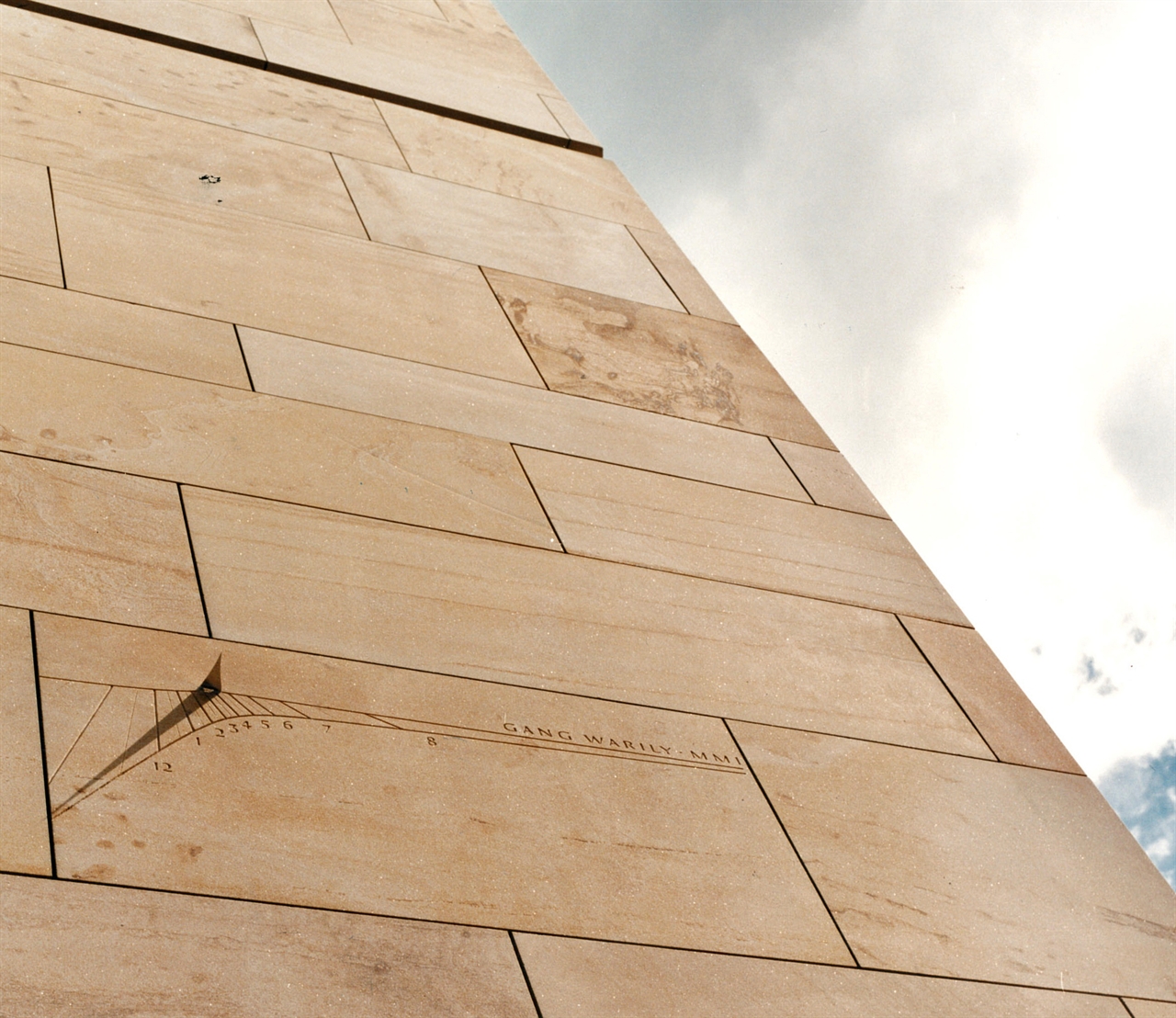
National Museum of Scotland 2001
This dial was commissioned by the Earl of Perth who was at the time chairman of the museum. It was carved onto the Clashach stone facing of the museum wall. The words GANG WARILY form the motto of the Drummond family.