
THE OLIVES
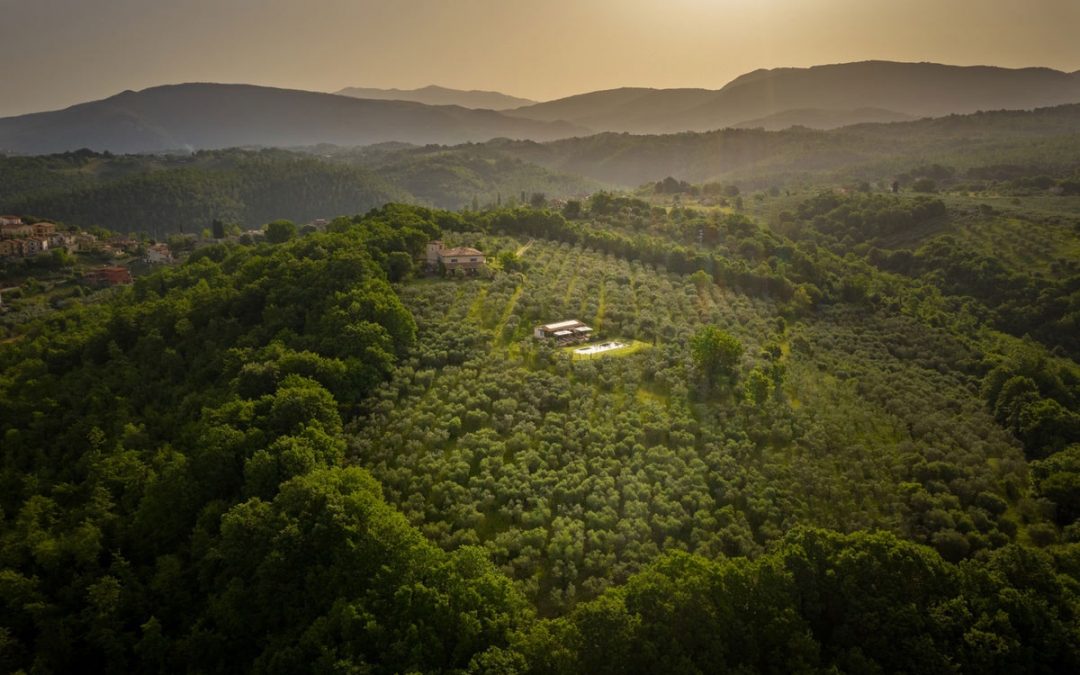
La Meridiana is surrounded by its Olive estate of some 1500 trees. Ideally they should be ploughed, fertilised, pruned and picked every year, but the sad fact is the more olives you have the more money you lose, so the maintenance is not of a perfect standard, but we love them so much that they cannot be abandoned.
We choose the best plants to prune and fertilise and every summer the grass is cut to keep the brambles at bay. At the end of November the harvest commences and after a Christmas break lasts usually into the new year. Large plastic nets are laid on the ground and the fruit shaken off the tree by a pneumatically powered lance whose end has several flapping rubber strips which knock the branches near the clusters of fruit. Once grounded the fruit is placed in containers and taken as soon as possible to Marco Agamenone to be pressed. Some of the fruits will break and start to oxidise and to ensure high quality it is important to press them quickly.
As explained in the passage on nearby sightseeing our olive oil is the finest in the world. It is cold pressed Extra Vergine. One reason for its quality is the altitude of the land, over 600m. Olives generally produce the highest quality fruit when grown in a climate which is near the margin of their survival. Over twenty years ago several hundred trees of the family in another field were cut down to soil level after a most severe summer storm which brought hailstones the size of marbles. The stumps grew again but the trees still have not produced a successful crop. Nevertheless the olives are growing again and we can press the for oil once more. The oil can be purchased from Giovanna before you depart.
PASSATA di POMODORO
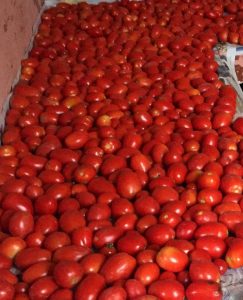 Most people in the village make their own tomato sauce. In September Giovanni picks the tomatoes he has grown throughout the summer in the vegetable garden at Palazzo. They are then laid out on newspapers in the old kitchen for about a week so that they become soft. They are then put through an electric machine which separates the skins and pips from the juice, and poured into old beer bottles which are sealed with new caps. These bottles are then cooked, many at a time, for 30 minutes in boiling water in a large cauldron over a bonfire in the garden. This releases the air in the juice and sterilises the liquid. When cool the result is the most delicious tomato sauce imaginable, far better than anything from a shop. It has a shelf life of several years. We regularly send consignments back to England. If you want Giovanna to cook with our passata she may be able to sell you some, but don’t be alarmed if Perroni appears on the bottle because no one bothers to remove the old labels.